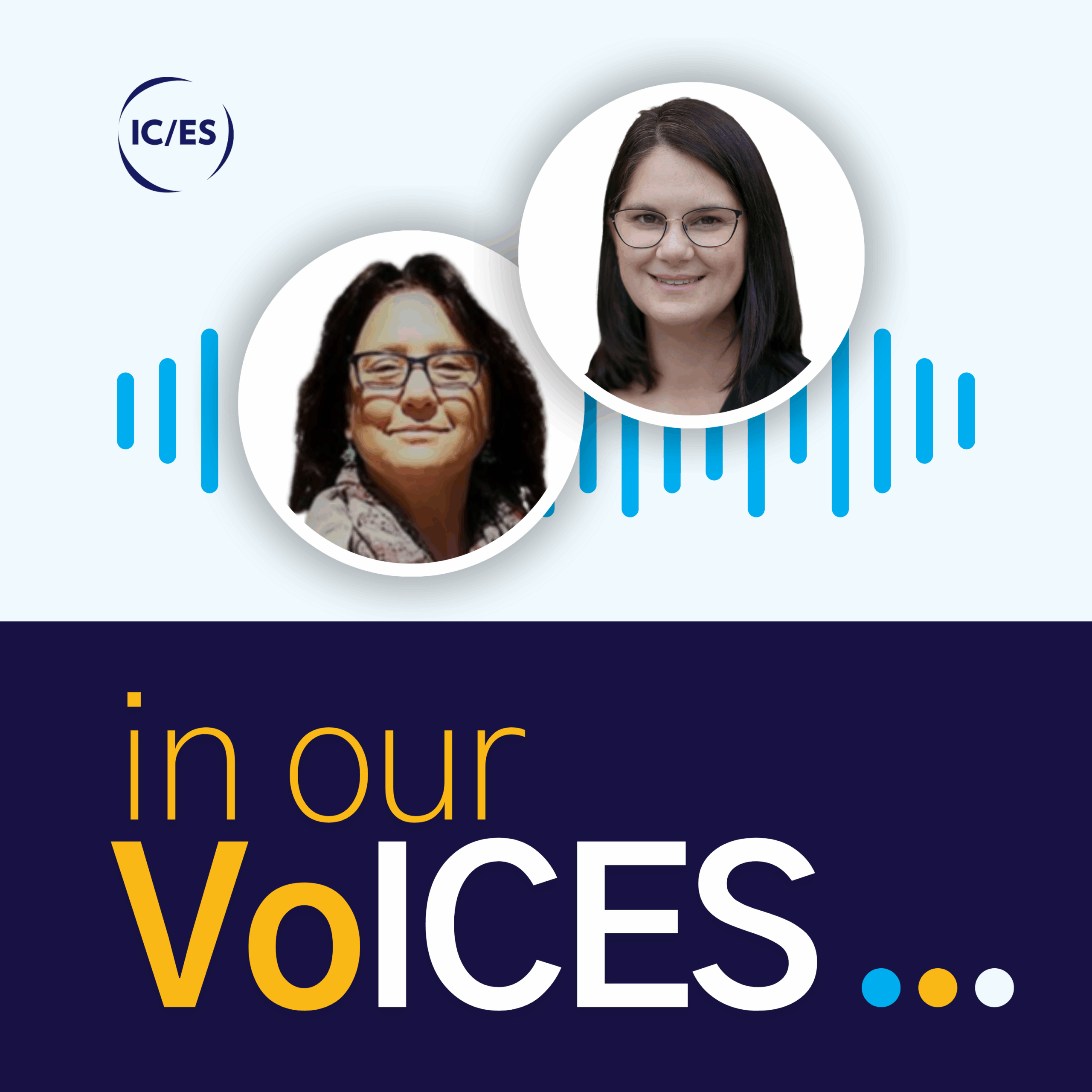
A Decade of Partnership: First Nations Data Governance in Ontario with Dr. Jennifer Walker and Carmen Jones
00:00
36:16
How has First Nations data governance in Ontario transformed over the past decade? In this episode, Jennifer Walker and Carmen Jones discuss how the ICES and Chiefs of Ontario partnership has evolved—reflecting on its origins, its current impact, and the goals shaping its future.
TRANSCRIPT
Misty Pratt
Hello everyone. I’m really looking forward to this episode, because we have a special guest host for you today. Dr. Jennifer Walker is a Haudenosaunee member of Six Nations of the Grand River, and her work focuses largely on Indigenous community engaged health research. She is a Senior Scientist here at ICES and an Indigenous Health Advisor. Jennifer’s research program addresses two key areas, including aging and dementia in Indigenous populations and Indigenous data sovereignty, which is one of the topics of our discussion today. We are so delighted to have Jennifer with us on the podcast. So, without further delay, here she is.
Jennifer Walker
Well back in 2012, ICES and the Chiefs of Ontario came together to sign a data governance agreement. In this episode, we’re going to talk about a decade of partnership First Nations data governance in Ontario. This data governance agreement recognized the importance of protecting First Nations data and making sure it’s used in ways that align with community values and priorities. In 2023, that agreement was renewed and strengthened. It is guided by the OCAP principles of First Nations ownership, control, access and possession of First Nations data. Joining me today to tell this story is Carmen Jones. Carmen Jones is the Director of Research and Data Management at the Chiefs of Ontario. Together, we’re going to trace the story of this agreement, how it began, how it’s grown, and how it’s shaping the future of First Nations data governance and health research in Ontario. Welcome Carmen to In Our VoICES.
Carmen Jones
Thank you, Jennifer. It’s been a pleasure to be here, and nice to see you again. Jen and I have been working together for some time. I’m from the Garden River First Nation just outside of Sault Ste Marie, and I’m a member of the Serpent River First Nation just outside Elliot Lake. And I’ve been working in this area for some time now. We started back in 1997 when the Chiefs of Ontario brought me in to work on some of the work on the Regional Health Survey. I’ve been with the Chiefs of Ontario full time for 13 years. My background has been working with data at Cancer Care Ontario, at ICES, and at the Chiefs of Ontario. It’s been a nice, long road, but very beneficial to the communities and to the First Nations people in Ontario.
Jennifer Walker
Well, any listener can see why it’s obvious why you are here telling this story, because you have that history and experience, and you know that experience and history of the relationship between Chiefs of Ontario and ICES almost parallels the history of you and I working together Carmen, but actually started a little bit before us. But when we met each other, it was at a point where both of us were working in these spaces. Our paths hadn’t crossed yet, but the agreement between Chiefs of Ontario and ICES had actually already been signed. We just hadn’t begun to actually make it a reality. So, the work we’ve done together has really been about taking that agreement and making it real, right? Like actually making that work of First Nations data governance happen at ICES.
Carmen Jones
That’s exactly true. Jen, the history of this relationship that we have at ICES started way back in 2010, 2011. I was brought into the Chiefs of Ontario, and I wasn’t yet a full time staff yet, and I was a facilitator. And one of the things that happened is that our health director, Tracy Antone, at the time, heard David Henry, who was the CEO of ICES, and he was talking about data linkage, how it could help First Nations people being able to store the data being protected. And the light bulb went off in Tracy’s head and said, well, we need to top this individual. So, she brought me on board, and we had a conversation with the Chiefs Committee on Health. We discussed on how this the ICES data, First Nations data could be protected, and particular under OCAP, which is to protect the data of First Nations people.
So, I want to talk a little bit more about OCAP a little bit later on, but it’s very important that we did not have being able to protect our own data. Our data sits in the federal government, the provincial government. It was also brought to our attention back in 1997, but they are the RHS, which is the Regional Health Survey that Stats Canada had our data. And that’s how it started in 1997 when we started to think about OCAP. So, in 2010 we brought together ISC, Indigenous Services, Canada, Cancer Care Ontario, ICES and the Chiefs of Ontario to the table to discuss, what can we do here? So David Henry was very creative in his ways, and so was the Chiefs of Ontario, and we talked about how we could get the Indian Registry to be brought into ICES, so we can start to do linkage and the health of our people, and making sure that the data that we wanted to link could bring some light onto the health of First Nations communities across Ontario.
So basically, that’s how it started. And then I worked on the agreement with our legal person who I’m still working with yet, which is her name is Krista Yao, who is one of the few people and lawyers that have a really good in depth understanding about, you know, OCAP and, you know, data protection. So, we ended up putting in the application, and we got it, and the agreement was signed in 2011 and then we started to discuss the data governance agreement with ICES. So, it’s been quite a journey, and so far, it’s been more than 14 years, 15 years since we’ve started this journey, and then Jen could talk about how we got together and we started to work on this.
Jennifer Walker
Yeah, so from my perspective I was an epidemiologist. I am an epidemiologist, and I had done work with ICES data during my doctoral studies, but hadn’t really been engaged and involved in the broader work that ICES was looking to do with in partnership with Chiefs of Ontario, and when I was kind of invited into that space to think about how I might be able to support now that there was this agreement, how might I get involved in supporting the work? And was invited in by the then CEO Michael Schull. I reached out to my mom. This is how things work, right? So, I reached out to my mom, who worked for Chiefs of Ontario and was Carmen’s colleague, and my mom introduced us. We were able to have lunch together and say, why would we do this? What would be important about it? And there’s lots of good reasons for that, right? Why it is an important thing to work on? Why is it important sometimes to put our energy as Indigenous people into non-Indigenous institutions? And in this case, we’re putting our energy into data about us that wasn’t collected by us or for us, but it’s data about us that could really help with decision making in our own communities, and that’s why, right? The reason is really to make sure that that data that sit at ICES can be unlocked for First Nations to be able to use to make decisions and to actually be a way of helping self-determination and sovereignty. So, I’m wondering if you have, if you want to talk a little bit about the why from your perspective, like, what are some of those things that have happened in the past with data that have been harmful?
Carmen Jones
So, in the past, what happened is that much of our data would sit in government, and it was analyzed by government officials, and a lot of times they didn’t understand the history of our people. And in order to tell the story properly, you need to know the history. And a lot of times the data analysts that were analyzing the data did not have an understanding. I could tell you a little story about when I worked for Cancer Care Ontario, and they couldn’t figure out why the data within the Indian Registry was kind of skewed. They didn’t know that at the time the Indian Act changed. So, in 1985 many of our people came back onto the Indian Registry. So, it made a big difference that there’s a big spike in First Nations on the Indian Registry. So that made a big difference in understanding the data and what it was doing. So, you need to know the history of our people, and if you don’t know the history of our people, then the data is not telling you the correct story. So, we have to have, you know, individuals, data analysts, people like Jen, people like myself, that can understand and put forward why certain things are happening in communities. Why is it that we have a high rates of diabetes, and it’s not because we don’t exercise. It’s not because, you know, we don’t eat properly. It’s because of the of the past, we don’t have good food going into our northern communities, the water in many of our communities, like there’s, at one point, there was 137 First Nations in Ontario that boiled water. So, you think about that in why these things happen.
And I think that in many times, when you’re just a straight data analyst or an epidemiologist without that background, you’re telling a different story, and that is a something that we didn’t want to happen. And so, when Stats Canada wanted to go into our communities and collect data and use that data on their platform and let anybody look at it and tell their own story behind it, it wasn’t telling a true story. So that’s why the RHS came in place, and we did have from the AFN. The acronym of OCAP came about, ownership, access and possession, because it is our story. It is our data. It makes a big difference. So, with the agreement that we had with ICES, it was a stepping stone for data sovereignty. It was a stepping stone for data governance, because data for governance is very important, and data for services, and that is important as well. So, we have this agreement with ICES, and it has proven to be a great agreement, and we signed it in 2012, and it’s been already 13 years, and not once has the data been breached, which is very important to know. So, it’s been exciting 13 years.
Jennifer Walker
Absolutely, and I think so one of the things that I learned while we were doing this work together was the importance of actually starting. So, we had the agreement, we had, like the pieces in place, and then we kept learning as we went. We didn’t wait till we had everything figured out before we actually started. So, we started with project on cancer, one on diabetes, one on aging, and it grew from there, and we just kept growing and growing. Now other groups like Mamow Ahyamowen are using that data and the data linkage that exists through that agreement to be able to, again, like use the data by First Nations for governance. And so, one thing I wanted to remember with you while we’re talking here, is a flight we took to go present this exciting relationship in Australia. Went to a conference in Australia, and as we were on the flight, we were thinking about, how could we, of all the things we’ve learned so far, we have this agreement, we have this relationship, and we have all this learning from these projects. How can we convey that to this, this international audience. And that’s where that sort of little framework for how, how we work together, data governance, having the governance of the data and also the relationships to go with it, having those Indigenous knowledges and perspectives and the methodology built in. I mean, there’s no other place I could do epidemiology that is embedded in Indigenous knowledges, in First Nations, realities and knowledges. And really like thinking through that framework for how we work together. And that was a long time ago, and it still holds up, you know, because we had pieces of place, and we just kept building. And I don’t know if you have any reflections from going to tell that story internationally.
Carmen Jones
Well, I think one of the main things that came across to me is that we used our cultural ways. And one of the most important pieces when we work with other nations and other, you know, non-First Nations people, the first thing that we do is follow the seven, lot of times seven grandfather teachings, which is, you know, trust, respect. And I think one of the main things about all of this is that relationship building. We developed that framework that Jen and I worked on and was on a plane, but at the same time, it really wasn’t new to us.
Jennifer Walker
No.
Carmen Jones
It was something that we’ve been working on without even putting it down on paper. And so, when we went to the conference, we thought, hey, we better do something to show them how we work together. It, for me, was exciting, and it showed the other nations and how we work together. And it became a very important piece of work that we were doing together, and that framework became part of the foundation of our work with ICES.
Jennifer Walker
Can you talk a little bit about how it works, how accessing the data works, like, what happens if a researcher wants access the data, or what happens if a community has a question wants to access the data? How does the data governance actually work?
Carmen Jones
I want to go back to that you know, what were the goals of the partnership? What were the future plans? And one of the things that, as a Director of Research and Data Management, I am the one that implements that agreement for Chiefs of Ontario. And how we work together with ICES and some of the work that we do is that we do data linkage for the Indian Registry system in order to access the Indian Registry system. We also have the Data Governance Committee, which was in place for three years, and now, after three years, we are evaluating that committee and making recommendations, how to make it stronger, how to make it work better. So that is what we’ve done so far. I think the other thing too is that the agreement, what it did, is that it also had communities being able to access the data by going through the applied research health questions that we had the AHRQ within the ICES so communities can apply to access their data within the Indian Registry and then ask questions of the data within ICES, like health questions. And so that has been very, a very powerful tool for our communities, and they have learned a lot from that. And I think the other thing with ICES is that over the years and and we are now working on data sovereignty, data governance.
We’re in the field right now with the Regional Information Governance Center, and we have a committee. It’s called the Data Champion Advisory Committee for the development of that center. And we do have the CEO that’s of ICES sitting on that committee to guide us, to bring their experience and to help us move this forward. So, things are moving since 2012, since Jen and I got together, and things have you know, the whole landscape of data has changed. For example, UNDRIP, one of the key backbones of UNDRIP and all the services that they do is that they need the data in order to figure out whether or not the services that are being provided are working. So, in everything that we do, ICES, Chiefs of Ontario, working with Jen has really proven to be a very important piece of work as we move forward in the area of data governance and data sovereignty. I just want to mention a little bit more about OCAP. Like everybody thinks about OCAP, oh, we can’t do anything because, you know, communities want to protect their data. I look at it a little bit differently.
I look at OCAP as nationhood, meaning that, you know, all the data that we have in all the nations, is that, yes, they need to protect their data, but on the other hand, we also need to look at it is that we need to look at it as OCAP being the principles around the nationhood over all of our data, so that when we’re looking at, for example, the health of our communities, we got to look at all the data. We just can’t look at one specific area. So, it becomes a tool to help us in the whole of Ontario. So that makes a big difference. And I think a lot of times what happens is that researchers think that OCAP, particularly when they applied with the Data Governance Committee, was a bloc., No, it gives you an opportunity to work with us properly and getting your job, getting your research in a way that is working with us, not against us.
Jennifer Walker
I definitely agree. Like, as a researcher, I feel like OCAP is sometimes misinterpreted as like a stop sign, when really it’s a roadmap. It’s actually showing us how to work together in the best way. I mean, it does take a lot of commitment, and I have seen researchers sort of turn back when they see how complex the roadmap might get, but that’s that’s okay too, because then it’s serving its purpose to help people know what direction needs to happen when, when people are working with First Nations data, and the responsibilities that they have when they access and use First Nations data.
The very first CIHR grant I got as an emerging First Nations, you know, academic was with the Chiefs of Ontario, and it was a First Nations aging study, and we used the data at ICES as well as other data, including the Regional Health Survey. And then the most recent grant I just got is to continue that work and to do sort of the First Nations aging study, 2.0 where we’re now actually going to have the ability to link the Regional Health Survey data with the data at ICES, and unlock a whole different way of looking at the survey data alongside the administrative health data. So, we’re still growing, we’re still learning, we’re still working together, and we’re still like drawing that map really like, because that map, that that map that shows us how to do this work together, it evolves, right? Because our understanding evolves and yeah, and there’s lots of opportunities for people to learn more about OCAP by taking the registering for the OCAP training course
Carmen Jones
Yeah.
Jennifer Walker
Offered through FNIGC
Carmen Jones
At Algonquin College, you can. You can sign up there.
Jennifer Walker
So, when we think about First Nations data sovereignty and First Nations data governance, it is sort of two things, right? It’s the having First Nations governance of the data. So, things like OCAP, like First Nations need to own, control, access and possess First Nations data. But then it’s also the use of that data for governance that the data being available to help in decision making. So can you talk a little bit about some ways that First Nations, now that the data are available in the way they are through this agreement that first nations can use that data for governance, or that they have used the data for governance.
Carmen Jones
So, an example about given the aging study, our age is really low, like 45 is like when we start to see people look at in the last month, two people that were close to me died at 45 years old. So it’s like, old like, but it’s not, yeah, so it’s that comparison to the general population, to our population, and that was I was trying to get at, is that knowing the history, knowing that all those impacts that have been on our people, that makes us have these diseases or whatever happens because we’re not well, and because we’re not well is because the impacts of, they call it residential school, Indian Day School, all those things that happen to us. That’s the impact of why we’re not well.
Jennifer Walker
Yeah, so that we’re not just modeling our programs to them on what, you know…
Carmen Jones
The general population.
Jennifer Walker
Yeah, what people are generally doing exactly, yeah, we’re not modeling on our modeling our programs on that that we actually because the program, it doesn’t just have to be offered to people who are younger, it has to look different.
Carmen Jones
Yeah.
Jennifer Walker
It has to look still look different for people in their 30s or their 20s who have type two diabetes. And these are things people actually know, but when you see it in data, and then also, then you can use that data for advocacy and storytelling, and it helps with that decision making about how to change things.
Carmen Jones
It’s one of the things about the diabetes things is the impacts that causes diabetes, and that is the intergenerational trauma. That’s why it looks different in us. One of the things I noticed, and that that’s why it’s very important, is that the models that are developed for diabetes, for aging, is based on models that are not First Nation driven. So those models take into account that individuals in the non-First Nation world, their aging is, is later in life, because they didn’t have the same sort of impacts and the trauma that the First Nations people have gone through. So, when you take that and you develop a model for First Nations, it’s going to totally look different. And that’s where the advocacy coming from, the governance or the leadership of that community can go, and they can go negotiate and say, “this is the difference between what you’re proposing our people go through and what we see as something that could help them”. That’s the difference.
Jennifer Walker
And I think about that aging study that we did, we actually saw the frailty profile. It was the profile of frailty was 20 years shifted, 20 years younger age groups, and that actually was quite helpful in also communicating the need for why we needed Covid vaccines not to have the age same at age cut off in the early days, as for the general population in Ontario, because the 45 year olds look like 65 year olds when you think about like the like, the physical impacts of all these, this colonization and stress. And I think so that, and in our, in our, in our going forward work, what we really learned from that aging study wasn’t just okay, we have this, like, really awful looking frailty profile. It was about really pushing us to think about strengths based interventions to prevent frailty, and that has to be way younger, right? Because we’re thinking about it from our own perspectives, in our own communities. We’re not thinking just about, okay, well, we got to prepare for all these people who are going to be frail at age 50. We are actually saying we’re going to have to do more at age 25 at age 30, at age five, to prevent that frailty. So having the data in our hands to make decisions and to think about our health and health care and social systems and all those things differently. It really that’s where that data for governance comes in. It’s the data in our hands to be able to look at the picture differently.
Carmen Jones
That’s right. Of all of this work that we’re doing you know, people tell us that, you know, data, the numbers, and that we also got to look at the stories. We also got to look at the qualitative data, and that’s with RHS. A lot of in this qualitative data, it’s the stories that we need to have in order to inform the quantitative data that we have. So right now, there is a move in Ontario that our communities want to learn more. What is data, you know, and people just think of the health data, the numbers and that. But look at it much more broadly. We were working with the Ontario government and working on, you know what other data is in, you know, the Government of Ontario, and I said, Well, I think we need to have the individuals that work on land and resources, because that’s data as well. So, it’s very important that people understand that data is just not health, but it’s very important because that’s where all, mostly the data is, but at the same time, there’s other data.
I think that through our project, that we’re doing with the Regional Information Governance Center Project, is that we’re looking at a more broader understanding of what data is. So, people look at data, oh, it’s just the numbers. It’s not just the numbers, it’s the stories of the people. It’s what has happened in the past. For example, you know, a lot of times we question, where is all the data on the children from the residential school system? Who holds that data? Well, we can’t get a hold of that data right now, but I think it’s something that we should be thinking about in the future. For example, there’s also the social data within the government on child welfare, and so, you know, that will be something very important that we get and and that’s like the data that’s collected by the child welfare agencies, like how many of our kids are in care. So, I think that for the future, there’s a huge amount of things that we need to do. And then we’re also working with the University of Toronto on AI project, which in some sense sounds very scary, because AI is used in different ways. And right now there is a AI strategy from the federal government that gave us one month to respond to an AI strategy, and that they nothing in there talks about data sovereignty and now the algorithms that could harm our people. So, these are the things that we’re looking at. It’s a broad world out there of data. We talk about big data, we talk about open data, but what’s not talked about is our First Nations and data sovereignty, and our control over that data and the possession of that data.
Jennifer Walker
That is so well put, because it’s changing really quickly, right? There’s new things happening all the time. We want to make sure we’re keeping up, we’re part of the conversation. And so yeah, I applaud that, because it’s not easy to be part of all of these different conversations. And I think looking forward, the goal for ICES in this relationship is really to follow the direction that Chiefs of Ontario and First Nations in Ontario, want to go with data and make sure that we aren’t setting our own agenda really. We’re really in a position where we’re trying to align the work that we’re doing and the things that we’re building to be able to support the goals and the self determination of First Nations in Ontario, and so aligning to that is where ICES, you know, will be going, and you know is positioned in those kind of agreements. And then watching where Chiefs of Ontario needs to go and where you’re going, it will probably challenge us, as it has in the past, to also try and make sure we’re. Being critical every time we’re doing something at ICES, to make sure that we’re thinking through things from the perspective of this relationship and this agreement.
Carmen Jones
I think it’s very important, because, you know, one of the things that happens with the Chiefs of Ontario, we have a Research and Data Management sector within the Chiefs of Ontario, and we’re not that big. There’s a lot of pressure that’s put on us to get the work done, and we can’t do the work if we don’t have access, and we’re not able to possess that data to do the analysis that we need for the Chiefs. And so, it gets frustrating, frustrating for the communities, frustrating for us, because we want to do good for our communities. Want to make sure that they got the information. But at the same time, there are ways that we can do it, like, for example, Jen and I worked on and mostly Jen worked on the covid model, and now that Covid model is being out in the field. Jen and her colleague, have been out there with one of my staff, and they’ve been giving presentations on this Covid model, which can be used not only for Covid, but can be used in the future for other emerging diseases that come out.
Jennifer Walker
And maybe that’s one good example to wrap up the importance of this agreement is the response we were able to provide when we had an unexpected event like Covid.
Carmen Jones
Yes.
Jennifer Walker
Right. So, we had this data governance agreement. We had, really almost 10 years of sorting through the relationship the governance, the processes internally to ICES, to how to align to OCAP, things like that. And then when Covid hit, and ICES was in a position to be able to support the information needs of the Ontario government and the health system, we could also support the information needs of the First Nations in Ontario with reports every week, and then every two weeks for Covid numbers, for Covid vaccinations, when, when that started. So, it was sort of like a groundwork had been laid so that we could respond when needed. And that’s really the magic here, right? So that it’s really like the foundation that we can do a lot of things from
Carmen Jones
And I think the other thing too, I think the Indigenous Services Canada has recognized that Chiefs of Ontario can get the job done, and that partnership with ICES is the reason why a lot of times, and that’s why I’m able to do the work that I’m doing right now. Think it will continue, because if UNDRIP says that you need the data as the backbone of the work that they’re doing in the community level and at the federal level, that’s what’s how they’re going to be accountable.
Jennifer Walker
So, if we’re sitting here 10 years from now, you and me having the same conversation, what do you hope happens in the next 5-10, years through this agreement, as we continue to develop the relationship?
Carmen Jones
Well, I see the agreement as maybe expanding. I think that the other thing is that being that we have that committee, the Data Advisory Championship Committee for the Regional Information Center, I think that will help us a lot. And there could be agreements between the two organizations, I don’t know, because, you know, Chiefs could tell us, no we want, but I think it’s very important to kind of do that vision out. I would like to see that our communities will have a very good relationship with ICES, depending on how ICES involves, because I think that’s going to be a challenge for them as well. And how do we see, you know, the work that we’re doing in the future, because we would like to have OCAP pretty well implemented by then. So, the data governance and data sovereignty will be, hopefully be something that we can talk strongly about.
Jennifer Walker
2035 we’ll be looking back saying, you know, we’ve come a long way. Because already, you know, we can look back and say we’ve come a long way.
Carmen Jones
That’s right, that’s 13 years coming a long way. And you know, when we first started off, I was just a Research Manager with no staff, and we now have about, I believe, 25 but it’s all part of the project that goes out. So yes, we’ve, we have come a long way, but it wasn’t for, you know, ICES and Jen Walker. I don’t think we’d be that far right now.
Jennifer Walker
Well, I think we can agree that it’s been mutually successful, a lot of reciprocity. Because if I look back to that beginning, I was also in a teaching intensive role about contract appointments and, like, you know, just trying to do a CIHR grant off the side of my desk. And and also, now here we are doing really. Exciting things together. So, I just want to thank you so much for doing this with me and for coming here in person to do it together, and for bringing Bo your dog. It’s been very nice. If people want to know more, they can check out the show notes with links. We’ll put a link there for sure, to OCAP training, to the work that’s happening through Chiefs of Ontario for developing a First Nations Regional Governance Information Governance Center. And yeah, we thank you for listening.
Carmen Jones
Miigwech.
Misty Pratt
Thanks for joining me for this episode of In Our VoICES. Check out the show notes for links to research and any other information that we’ve referenced in this episode. A reminder that the opinions expressed in this podcast are not necessarily those of ICES, please be sure to follow and rate us on your favorite podcast app. If you have feedback or questions about anything you’ve heard on In Our VoICES, please email us at [email protected] and we will get back to you. All of us at ICES wish you strong data and good health.